Last updated: 19.11.2026
Back in 1618, Polish writer Salomon Rysiński recorded a famous Old Polish proverb: “Gdańsk vodka, Toruń gingerbread, a Kraków maiden, and a Warsaw shoe — the finest things in Poland.” For centuries, our spiced honey cakes graced the tables of kings, emperors, and popes, served as diplomatic gifts, digestive medicine, and even durable military rations. Here is what lies behind Central Europe’s most famous treat.
Jump to any section below or scroll through — the trail tracker on the right follows your progress:
Why Toruń? Over 650 Years of History, Convent Recipes & Chopin’s Praise
Why did Toruń — above every other Polish city — become the undisputed capital of gingerbread? The answer comes down to medieval geography. Perfect gingerbread required three prized ingredients that all converged in Toruń:
- Top-grade flour from Chełmno Land: The fertile plains surrounding Toruń yielded premium wheat and rye, stone-milled along the Toruń Stream (including inside the 13th-century Castle Mill right beside the Teutonic Knights’ Castle).
- Rich wild honey from Vistula forests: Thriving local beekeeping supplied thick, dark honey from nearby woodlands and meadows.
- Exotic spices via Hanseatic & Black Sea trade routes: As a wealthy member of the Hanseatic League sitting on major crossroads, Toruń imported oriental spices both by sea via Gdańsk and overland from India and the Levant through the Black Sea and Lviv.
The ancestor of today’s treat was medieval honey cake (miodownik), gradually enriched with sharp imported spices. The Polish word piernik (widespread by the turn of the 16th century) derives from Old Polish pierny — meaning peppery or spiced. The earliest documented mention of Toruń’s craft dates to around 1380, naming pastry baker (Kucheler) Nicolaus Czan (Niclos Czan). Account books of the Teutonic Order show that both Niclos Czan and another early master, Heinrich Kuche, also sold large quantities of pure beeswax to the Knights — a valuable by-product of rendering raw honeycombs for gingerbread dough!
Alongside town guilds, local convents played a major part — especially the Cistercian-Benedictine nuns of Toruń (based first near the Church of the Holy Spirit outside Monastery Gate and from the 17th century at St. James’s Church). By the 16th century, Toruń gingerbread was so celebrated that its only serious Central European rival was Nuremberg in Germany. After fiercely guarding their secrets, both cities signed a historic guild treaty in 1556, mutually granting Toruń the right to bake “Nuremberg-style” gingerbread and Nuremberg the right to bake “Toruń-style” recipes.
Fryderyk Chopin: “Nothing Made a Greater Impression Than the Gingerbread!”
In August 1825, 15-year-old Fryderyk Chopin — spending his summer holiday in nearby Szafarnia — visited Toruń (staying at the Fenger townhouse at ul. Mostowa 14). In a famous letter to his school friend Jan Matuszyński, the young composer playfully listed the Gothic churches, Copernicus House, the grand Old Town Hall, and the Leaning Tower, before concluding: “Yet none of that surpasses the gingerbread — oh, the gingerbread, one of which I sent straight to Warsaw!”
Ingredients & Spice Secrets: Why Was Gingerbread Sold in Pharmacies?
In the 17th and 18th centuries, Toruń residents didn’t just buy gingerbread at bakeries — they also bought it at apothecaries (including the historic 1623 Council Pharmacy at ul. Szeroka 27). Doctors of the era prescribed spiced honey cake as a genuine stomachicum — a remedy to aid digestion, warm the body, and ward off chills. Wealthy travellers rarely set out on a journey without a box of dry, peppery gingerbread and a flask of wine or spirits to dip it in.
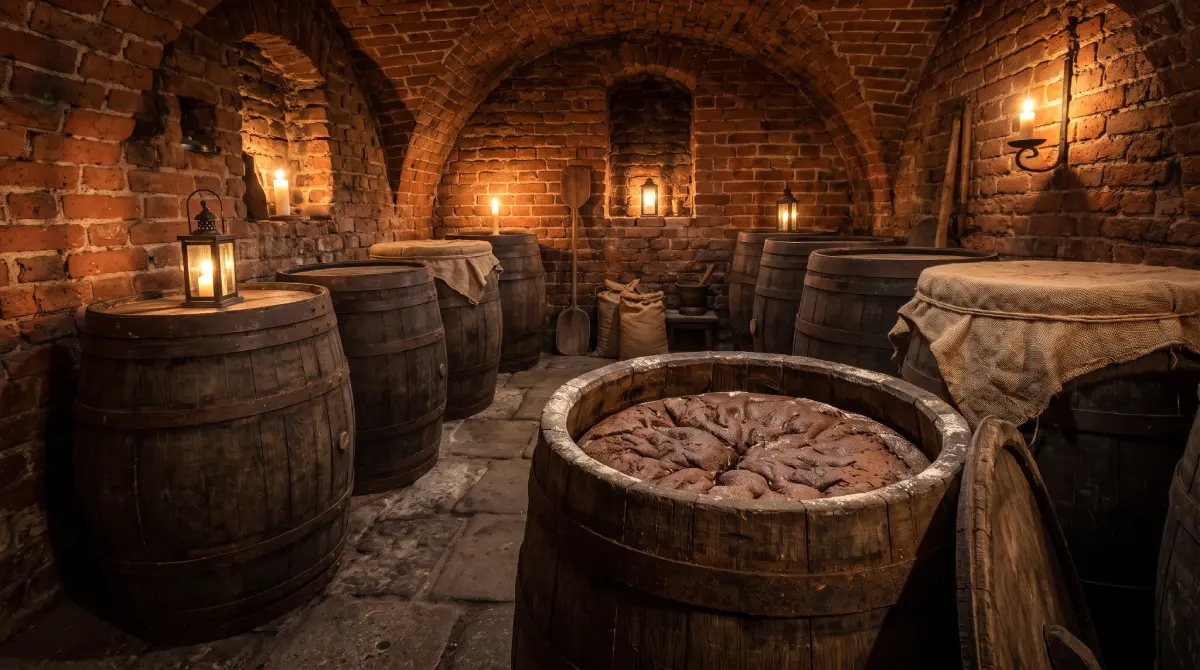
Those remarkable properties come from pure raw honey, rye flour, and a rich bouquet of aromatic spices. Here is what goes into authentic Toruń gingerbread and why it works so well:
Raw Honey (Buckwheat & Wildflower)
Replaces refined sugar and gives traditional dough its deep caramel colour and springy texture. Dark, aromatic buckwheat honey is rich in enzymes, natural antibacterial compounds, iron, magnesium, and B vitamins — and naturally keeps aged dough fresh for years!
Ginger Root & Black Pepper
The source of gingerbread’s authentic spicy kick. Ginger (rich in gingerol) is deeply warming, anti-inflammatory, and soothing for digestion, while a pinch of black pepper supplies piperine to boost metabolism and nutrient absorption.
Cinnamon & Cloves
Cinnamon bark brings sweet-woody fragrance and helps support balanced blood sugar, while dried clove buds deliver potent eugenol — a natural antiseptic, antioxidant, and warming spice.
Cardamom, Nutmeg, Star Anise & Allspice
Cardamom adds bright citrus-floral lift, nutmeg and allspice create warm resinous depth, and star anise paired with coriander gently soothes the stomach.
🍯 The secret of aging dough (from birth to wedding day!): Traditional dough was kneaded solely from hot honey and rye flour without eggs or baking powder, then packed into oak barrels and left to mature in cool Gothic brick cellars for months or even years! Old guild lore says that whenever a master baker welcomed a baby daughter, he mixed a giant cask of dough that very day — saving it to bake her wedding gingerbread years later.
Katarzynki, Figural Cakes & Pearwood Moulds: Types of Toruń Gingerbread
Stepping into any Toruń gingerbread shop, you’ll quickly see there isn’t just one style. Historically and culinarily, Toruń gingerbread falls into two main families:
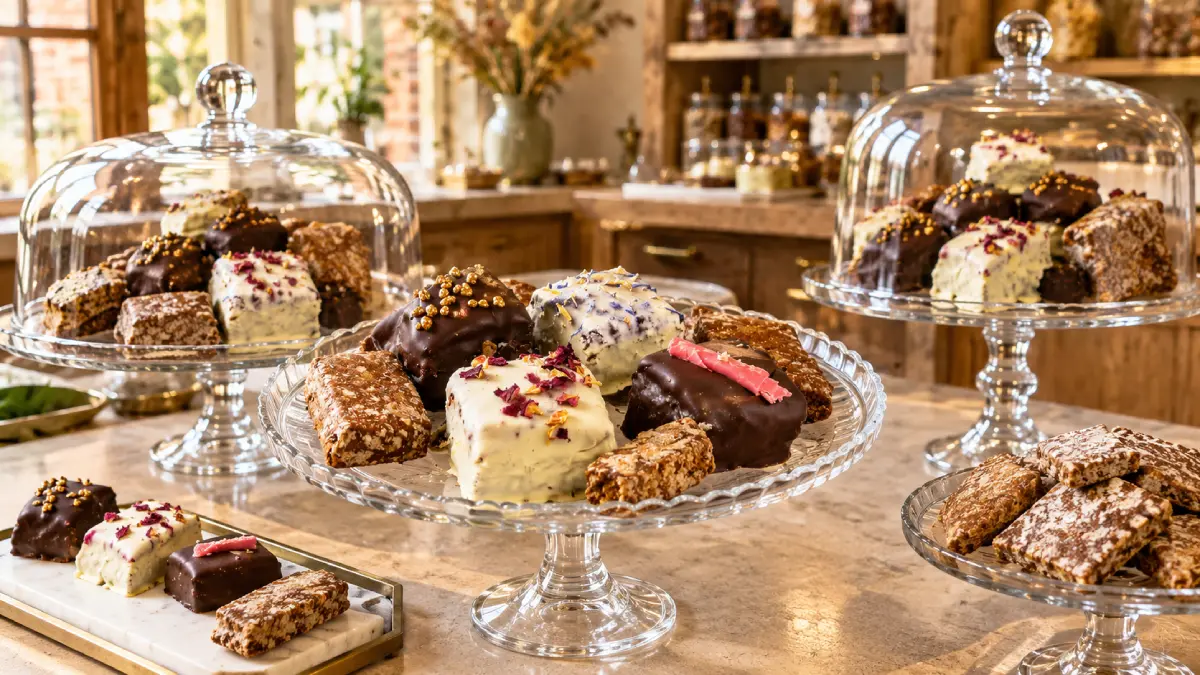
- Soft Dessert Gingerbread — led by “Katarzynki”: Light, fluffy cakes raised with natural leaveners (historically potash or baker’s ammonia, today baking soda) — sold plain, dipped in rich dark chocolate, glazed with white icing, or filled with tangy plum, apricot, or rosehip jam.
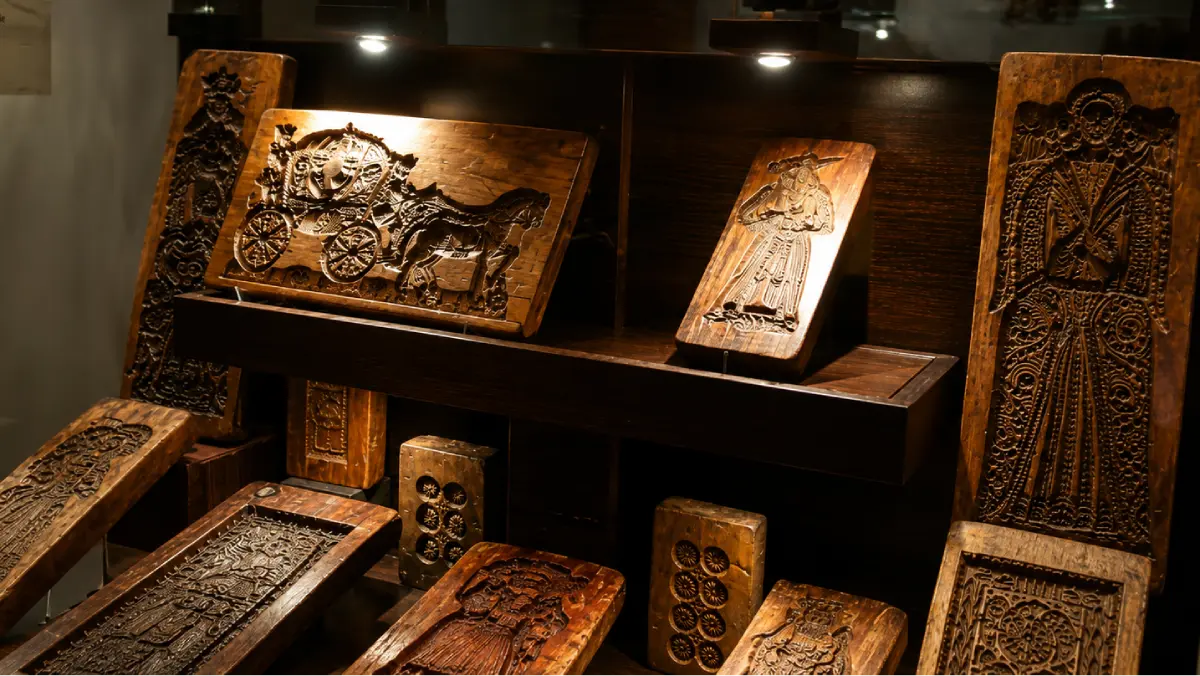
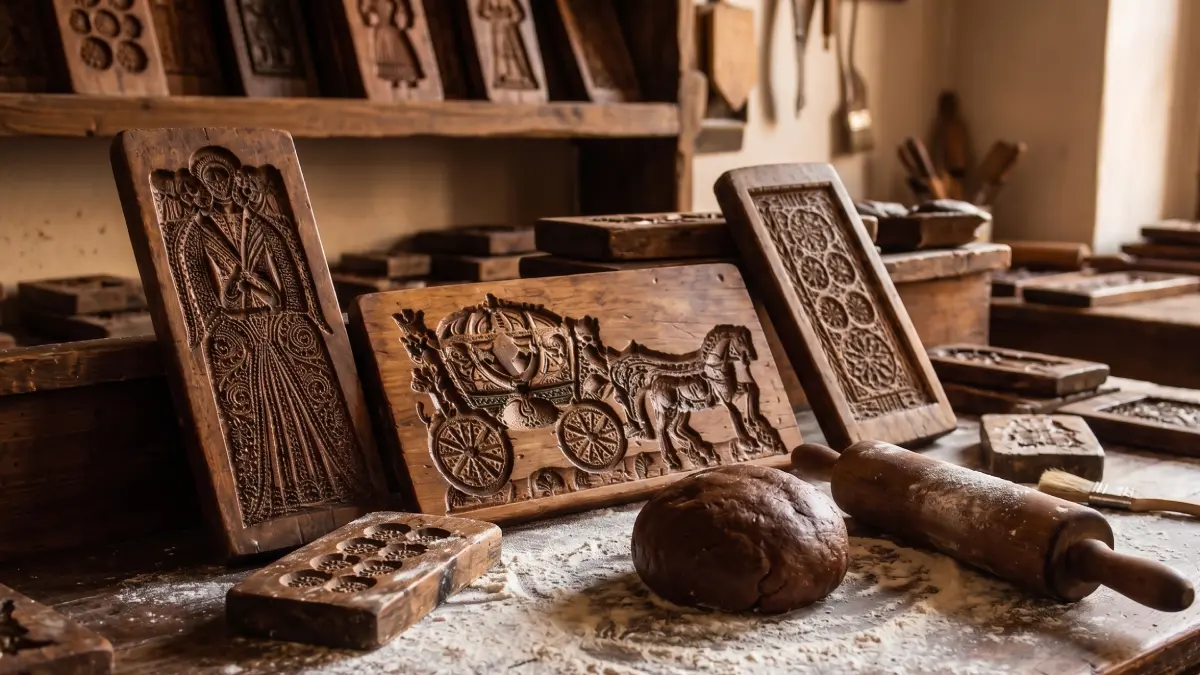
- Decorative Figural Gingerbread (gościńce): Crisp, long-lasting keepsake pieces pressed into hand-carved wooden gingerbread moulds (crafted from dense, non-resinous pear, apple, or linden wood). Historically even gilded with real gold leaf, they depict kings, knights, noble ladies, ornate carriages, and Toruń’s angel coat of arms.
Where Does the “Katarzynka” Name & Shape Come From? Facts & 3 Legends
Toruń’s most iconic cookie — the Katarzynka — has no twin anywhere else in the
world. Historically, its name honours St. Catherine of Alexandria, patron
saint of millers and bakers (and namesake of Toruń’s former St. Catherine’s Gate). On her feast
day — November 25 — Toruń bakeries traditionally launched the great pre-Christmas
gingerbread baking season.
Meanwhile, three beloved local legends explain its quirky six-joined-medallion
shape:
• Master Bartłomiej’s Daughter: when elderly baker Bartłomiej fell ill, his
daughter Katarzyna took over the bakery. Unable to find her father’s wooden moulds, she cut
circles using a small tin cup; placed tightly together in sixes, they fused in
the oven into a shape the townspeople adored.
• Apprentice Bogumił & the Queen Bee: poor apprentice Bogumił saved a
drowning bee, and the grateful Queen Bee whispered the secret of spiced honey dough to him. For
a surprise royal visit, lovesick Bogumił shaped cookies like two hearts linked by two
rings — the delighted king named them after Bogumił’s sweetheart Katarzyna, winning
her father’s blessing.
• Sister Katarzyna of the Convent: a third tale honours a Benedictine nun who
saved starving townsfolk during a famine by baking gingerbread from forgotten cellar casks of
aged dough shown to her by a grateful Mouse King.
From the 1760 Weese Workshop to Kopernik Confectionery Factory

The turn of the 19th century sparked an industrial revolution: small cellar bakeries transformed into steam-powered factories exporting Toruń gingerbread as far afield as Turkey, Japan, Africa, and North America!
Milestones of Toruń’s Great Gingerbread Dynasties
Birth of the Weese Gingerbread Dynasty
Around 1760, journeyman Johann Weese marries Elisabeth Lorentz (widow of his master Melchior Friebe), taking over the bakery. After her death, he marries Dorothea Schreiber in 1763 and establishes his own workshop at the corner of Strumykowa and Królowej Jadwigi Streets — the direct origin of Poland’s oldest continuously operating confectionery company!
Weese’s Steam Factory on Strumykowa & Rival Hermann Thomas
In 1857, Weese’s future chief rival Hermann Thomas opens his own bakery. Meanwhile, the Weese family embraces industrialisation: in 1868 Gustav Weese installs Toruń’s first steam-powered dough mixer, and in 1885 opens a modern brick factory at ul. Strumykowa 4 (today home to the Museum of Toruń Gingerbread).
Industrial Boom: Ruchniewicz & the New Weese Complex
Once Old Town plots grew too tight, gingerbread production moved to the suburbs. In 1907 Jan Ruchniewicz founds the First Polish Gingerbread Factory in the Mokre district, thriving alongside German rivals with patriotic keepsake cakes. Between 1908 and 1913, Gustav Weese constructs a vast modern factory complex in the Jakubskie Przedmieście district (ul. Żółkiewskiego 34), where Toruń gingerbread is still baked today.
Fabryka Cukiernicza “Kopernik” — Over 260 Years of Living Tradition
In January 1939, the Polish cooperative union “Społem” buys the Weese factories. Since 1951 the brand has operated under the name “Kopernik”, transforming in 1991 into employee-owned Fabryka Cukiernicza “Kopernik” S.A. To this day, the ul. Żółkiewskiego plant guards the historic recipes for unglazed Katarzynki, Toruń Hearts, and fruit-filled gingerbread.
Toruń’s Two Gingerbread Museums: Which One Should You Visit?
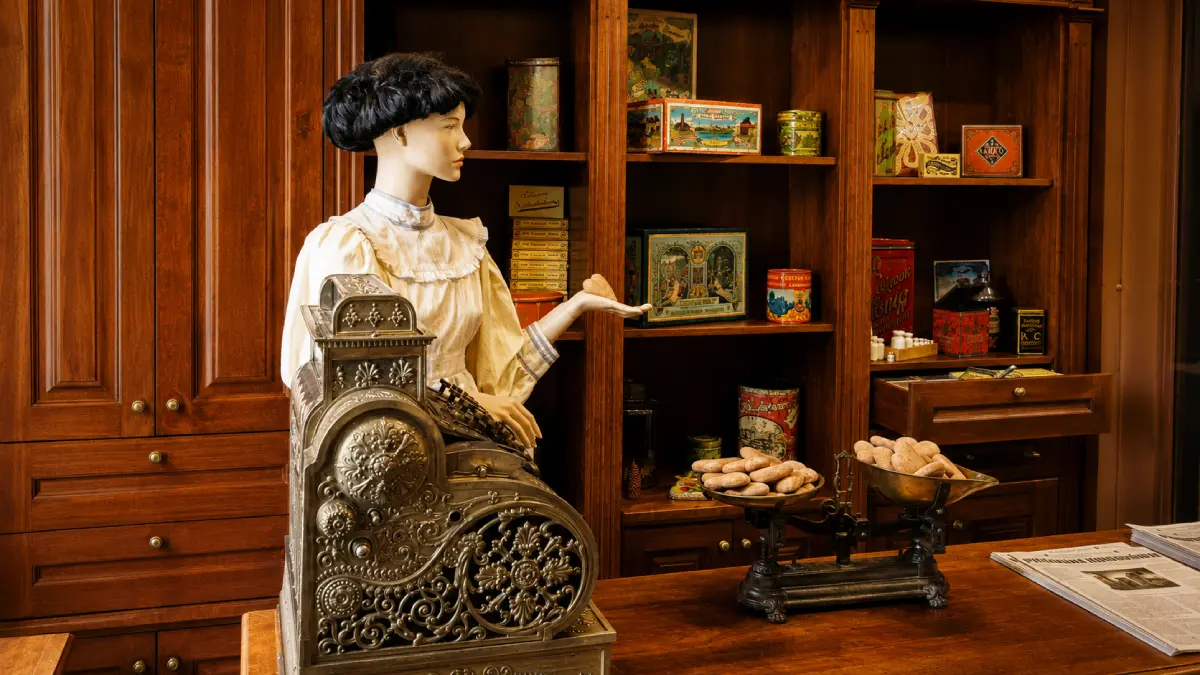
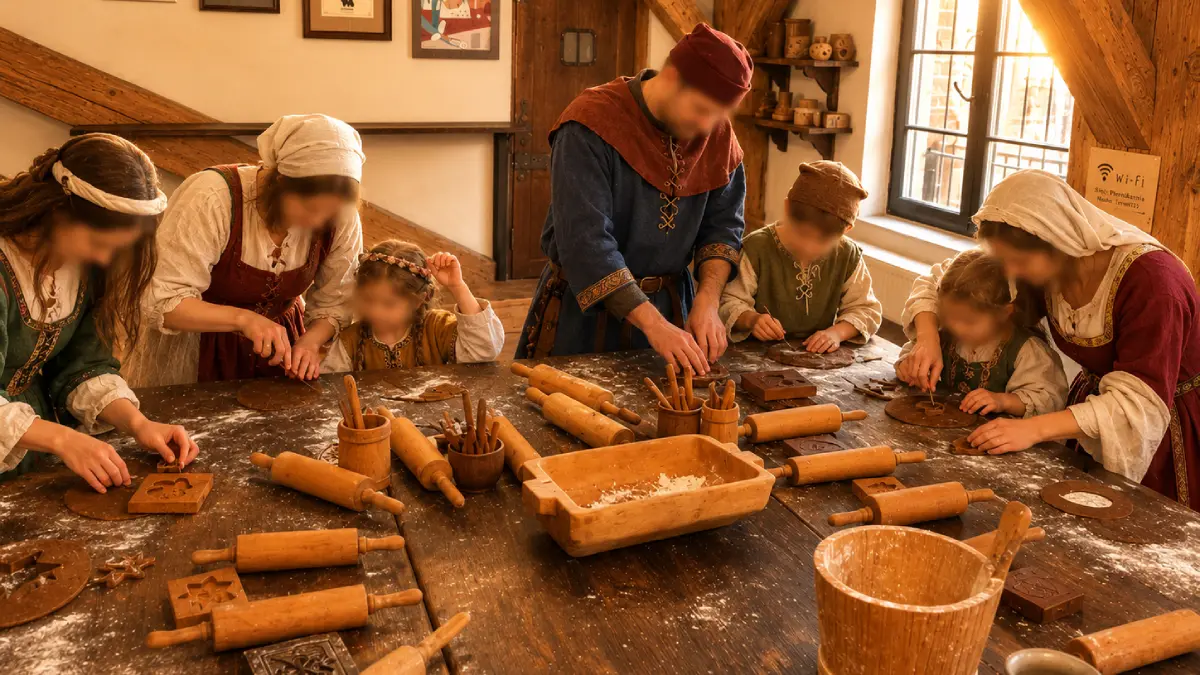
Visitors ask me this all the time: “I typed gingerbread museum into Google Maps and two different addresses popped up — which one is the real one?” The answer: both are fantastic, and each gives you a totally different experience. Here is a quick side-by-side comparison:
1. Museum of Toruń Gingerbread (District Museum)
Set inside the real 19th-century Gustav Weese factory! Europe’s largest museum
dedicated to gingerbread spans 3 spacious floors:
• Cellars: original baking ovens, a medieval market stall, and a priceless
collection of 17th- and 18th-century carved wooden moulds.
• 1st & 2nd Floors: the factory owner’s office, virtual historical costume
fitting, a vintage communist-era “Żuk” delivery van, a recreated old shop, café, and workshop
hall where you roll and bake your own keepsake gingerbread.
Official website: muzeum.torun.pl →
2. Living Museum of Gingerbread
Europe’s first interactive gingerbread museum, housed in an early-19th-century brick granary.
Instead of quiet display cases, you join a lively, humorous theatrical show
(English sessions available!):
• 1st Floor (16th century): under the lively supervision of the Gingerbread
Master and Spice Witch, you sift flour, grind spices in a mortar, roll out dough, and press
your cake into a carved wooden mould.
• 2nd Floor (early 20th century): see working 1905 factory machines and join
optional royal-icing decorating workshops.
Official website:
muzeumpiernika.com.pl →
🎟️ Important local tip: On weekends, public holidays, and during summer, timed workshop slots at both museums often sell out by mid-morning! Don’t wait until you reach the door — book your tickets online 2–3 days ahead so you can skip the queues and smoothly plan the rest of your Old Town walk.
Where to Buy Authentic Toruń Gingerbread? Trusted Local Shops & Bakeries
A quick local heads-up before you shop: many generic souvenir stalls sell brightly packaged cookies reading “Toruń” or “Old Polish Gingerbread” that — when you check the fine print — were actually factory-made near Warsaw or in Silesia using glucose-fructose syrup instead of real honey!
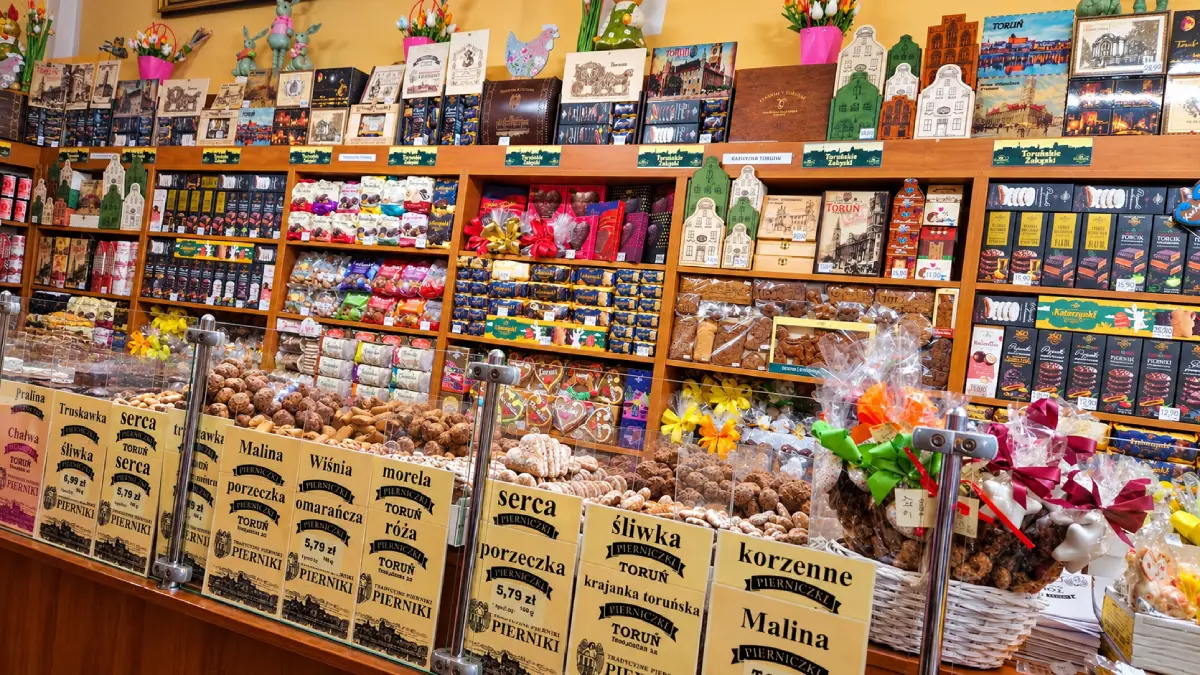
So where do Toruń locals buy 100% genuine gingerbread actually baked in Toruń? Stick to these trusted addresses:
Official FC “Kopernik” Factory Shops
The place for authentic Katarzynki (plain and dark-chocolate-coated), Toruń
Hearts, fruit-filled classics, and their premium artisan range “Z Serca
Fabryki” (baked with generous honey, and natural spices).
Official factory stores in Toruń:
• Rynek Staromiejski 6 (flagship boutique inside Artus Court)
• ul. Żeglarska 24 (historic townhouse on the route toward the Vistula)
• ul. Mikołaja Kopernika 42 (just steps from Copernicus House)
• ul. Strumykowa 4 (inside the historic factory & Museum of Toruń
Gingerbread)
• ul. Stanisława Żółkiewskiego 34 (factory outlet on Jakubskie Przedmieście —
biggest choice of fresh gingerbread by weight straight from the ovens).
Official catalogue:
kopernik.com.pl →
Boutique Bakeries & Specialty Shops in Old Town
Looking for hand-painted edible gifts, traditional carved-mould keepsakes, or small-batch
bakes?
• Iga Sarzyńska “Wzrusza Toruń”: upscale artisan boutiques famous for
butter-and-honey gingerbread, spiced chocolates, and velvety gingerbread spread — with 4 Old
Town locations: Rynek Staromiejski 5, ul. Szeroka 17,
ul. Mikołaja Kopernika 14, and ul. Chełmińska 4.
• “Pierniczek” Shop (ul. Żeglarska 25): a cosy traditional shop packed with
fresh gift boxes and classic Katarzynki.
• “Emporium” Toruń (ul. Piekary 28/1): charming gingerbread salon offering
treats in decorative tins and wooden gift chests.
• Piernikarnia Starotoruńska (ul. Franciszkańska 16): craft workshop
preserving old baking techniques and hand-pressed figural gingerbread.
• Living Museum of Gingerbread Shop (ul. Rabiańska 9): museum shop selling
handmade keepsake cakes, wooden moulds, and freshly ground spice blends.
What Else Can You Taste With a Gingerbread Twist in Toruń?
Gingerbread spice runs right through Toruń’s food and drink scene! During your stay, try: craft gingerbread beer brewed with honey and spices at Jan Olbracht Browar Staromiejski (ul. Szczytna), Katarzynka-flavoured artisanal ice cream at local parlours, warming spiced gingerbread coffee, and classic Polish meat or fish dishes served in traditional gingerbread sauce (sos szary) at the restaurants listed in our Where to Eat in Toruń guide.
Free Old Town Gingerbread Trail: 4 Spots to Catch on Your Walk
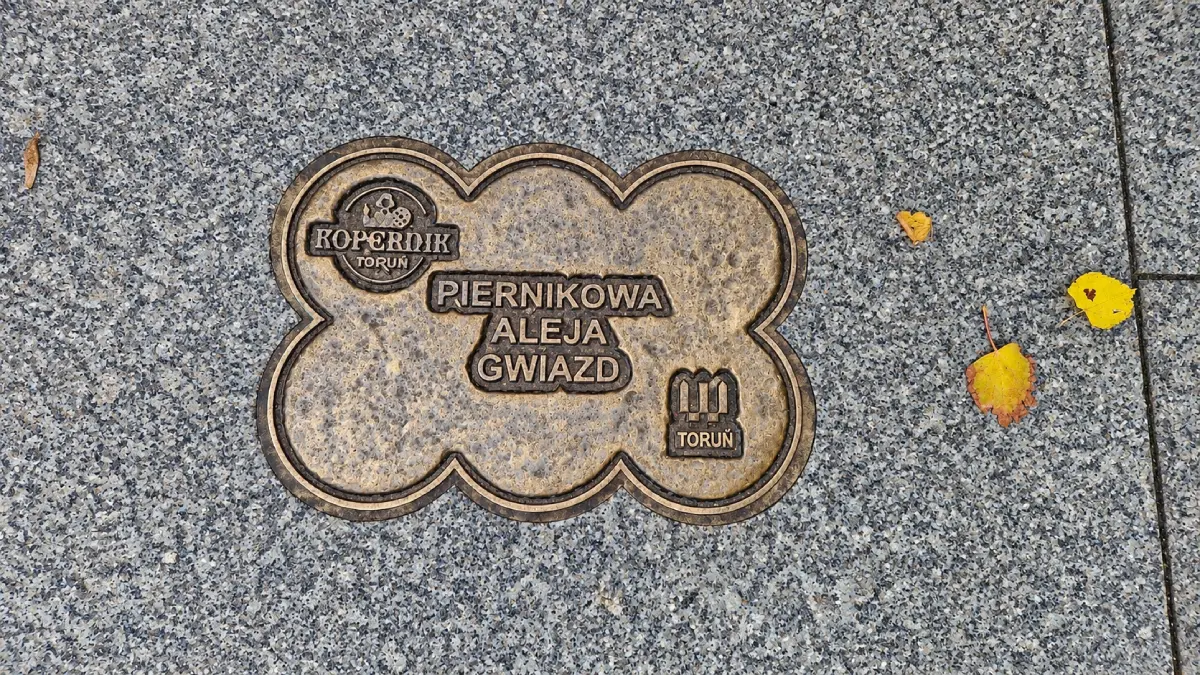
Even if you don’t step inside a museum, Toruń’s gingerbread culture pops up right on the streets. Keep an eye out for these four free stops on your Old Town walk:
- 1. Gingerbread Walk of Fame outside Artus Court (Rynek Staromiejski 6): Look down at the granite paving stones in front of Artus Court! Every June since 2003, bronze plaques shaped like Katarzynka cookies bearing the signatures of famous personalities linked to Toruń (including exoplanet discoverer Prof. Aleksander Wolszczan, iconic Polish rock band Republika, and speedway legend Tony Rickardsson) are inlaid right into the square.
- 2. Gingerbread Mould Sgraffito (ul. Szeroka 38): Pause outside the oldest Gothic facade on the main pedestrian street and look just above the ground-floor shopfront — decorated in 1963 with charming sgraffito depictions of traditional figural gingerbread knights, ladies, and carriages!
- 3. Monument of the Toruń Gingerbread Maker (corner of ul. Królowej Jadwigi & Małe Garbary): Snap a photo with our bronze “Green Lady” carrying her basket of Katarzynki right beside the historic Weese factory grounds.
- 4. “Gingerbread Town” Playground (ul. Podmurna 62): Travelling with kids? Tucked under the shade of the medieval defensive walls sits a free fairytale playground with giant gingerbread-themed play structures, benches for parents, and a summer splash zone.
Frequently Asked Questions About Toruń Gingerbread (FAQ)
How can you tell authentic Toruń gingerbread from tourist-trap knockoffs?
Always flip the packet over and check the exact manufacturing address on the back label. Genuine traditional Toruń gingerbread is physically baked in Toruń — primarily by Fabryka Cukiernicza “Kopernik” S.A. at ul. Żółkiewskiego 34 (direct heir to the 1760 Weese factory) and local Toruń artisan bakeries. Many souvenir-stall bags labelled “Toruń Gingerbread” are actually mass-produced hundreds of kilometres away.
Where does the Polish word “piernik” come from, and when was the first Toruń gingerbread baked?
The Polish word piernik comes from the Old Polish adjective pierny, meaning “peppery” or “spiced” — historically referring to honey bread richly seasoned with exotic spices, including black pepper. The oldest surviving written record of a Toruń gingerbread baker dates from around 1380 and names master baker Nicolaus Czan (Niclos Czan).
Which museum should you visit: the Museum of Toruń Gingerbread or the Living Museum of Gingerbread?
Both offer hands-on baking workshops, but the experience is quite different. The Museum of Toruń Gingerbread (ul. Strumykowa 4, part of the District Museum) occupies the authentic 19th-century Gustav Weese factory — three spacious floors of historical artefacts, antique wooden moulds, ovens, and vintage factory memorabilia paired with baking workshops. The Living Museum of Gingerbread (ul. Rabiańska 9) is an intimate, humorous live theatrical show inside an old granary led by the Gingerbread Master and Spice Witch. If you have time, both are worth a visit!
Why was Toruń gingerbread historically sold in pharmacies?
In the 17th and 18th centuries, apothecaries sold spiced gingerbread as a digestive aid and warming tonic. Its traditional spice blend — ginger, Ceylon cinnamon, cloves, cardamom, nutmeg, allspice, star anise, and black pepper — is packed with essential oils and antioxidants that warm the body, aid digestion, and act as natural antiseptics, while raw honey boosts immunity and naturally preserves the dough.
Why did traditional gingerbread dough have to mature for months?
Traditional gingerbread dough made solely with raw honey and rye flour (with no chemical raising agents) is extremely dense and stiff right after mixing. Aging it for weeks or months in oak casks inside cool brick cellars allows slow natural fermentation to soften the dough, develop a light crumb when baked, and infuse every grain of flour with spice aromas.
Where in Toruń can you buy fresh gingerbread by weight straight from the factory?
The widest range of fresh gingerbread sold by weight, limited editions (such as the artisan “Z Serca Fabryki” line), and gift tins at factory prices is available at the FC “Kopernik” factory outlet at ul. Stanisława Żółkiewskiego 34, as well as their official Old Town shops: inside Artus Court (Rynek Staromiejski 6), ul. Żeglarska 24, ul. Mikołaja Kopernika 42, and ul. Strumykowa 4.